Showing posts with label motorcycle. Show all posts

Collecting Motorcycles : Classic, Collectible, or Just Old ?

Ride long enough, and you’ll notice something about motorcycles : No one can own just one. Becoming a motorcycle collector is an insidious process. It starts when you buy a better bike but can’t quite bring yourself to sell your trusty old one. Then you’ll decide to explore a different aspect of riding, like off-road riding or touring, so you’ll buy a bike suited for that purpose. But you still won’t be able to part with the other two. Then you’ll run across a pristine example of a classic bike you’ve always wanted, and you’ll just happen to have enough money to buy it, so …


classics motorcycles


By this time, you’re too far gone to turn back. Like it or not, you’re a collector. But it could be worse. Peter Egan, who writes for Cycle World magazine, once wrote that everyone needs at least four motorcycles: one for touring, one for sport riding, one for riding off-road, and one classic bike to keep it all in perspective. So go ahead and indulge yourself. Motorcycles have gotten much more expensive in the past 15 years, but they are still cheap compared to cars. And they take up less space. You can park up to six bikes in the space of one car, with some careful packing.


Collector’s Choice


In the late 1980s and early 1990s, some investors decided British motorcycles were going to rapidly appreciate in value, and overnight, the price of Triumphs, Nortons, and BSAs skyrocketed. Many of the people buying these bikes were not motorcyclists : They were investors out to get rich.

Some people got rich off of the entire debacle, but for the most part, it wasn’t the investors—it was the people who sold the motorcycles at inflated prices. The Brit-bike boom lasted a few years, and then prices declined. British bikes still cost more than they used to, even when their prices are adjusted for inflation and appreciation, but they’re back down to somewhat reasonable levels.

The lesson to be learned from all this is that you shouldn’t buy a bike solely as a financial investment. It’s a risky proposition at best. Even if you get lucky and buy a bike that does increase in value, it probably won’t increase enough to cover the expenses you incur while you own it.

If you’re interested in a particular type or brand of bike, you can look for a particular model or year that may someday be worth more than other models or years, but that is a secondary consideration. When deciding what to collect, your first concern should be collecting bikes you like.


What Do You Like?


Before you start collecting bikes, ask yourself what you like. Do you like classic Japanese motorcycles ? Do you like the brutal efficiency of BMWs ? How about the fluid style of Italian sportbikes ? Or the simple elegance of British bikes? Perhaps you like classic American motorcycles. Whatever your style, your individual preferences are of key importance when you begin collecting bikes.


What’s Your Mechanical Skill Level?


How much time and energy are you willing to devote to the upkeep of your bikes? An American or British bike will require a lot more work to keep running than a Japanese bike or a BMW. Italian bikes will fall somewhere in between. Know your abilities before you start buying bikes with maintenance requirements that you are unprepared to deal with.

What’s Your Budget?


You also need to ask yourself how much you’re willing to spend. With the exception of Japanese bikes, any of the motorcycles mentioned in this chapter will take a serious bite out of your bank account. You can still pick up a decent British bike or a BMW for under $4,000, but if your taste runs toward Italian or American bikes, you’d better have considerably more cash available.

You can still find nice, older Japanese bikes for fairly low prices, though. The prices of a few early models, like Honda’s Benley Super Sport 125, have shot through the roof, but you can still pick up a very nice mid-1970s CB 750 for under $1,500, and you can find clean examples of other Japanese bikes for a lot less than that. Few of these bikes will ever have any serious investment value, but they’re fun to ride, easy to maintain, and make great projects for café chops.


What Constitutes a Classic?


japanese classics motorcycles - honda cbx1000


Classifying a bike as a classic is an almost mystical process. To be a true classic, a bike needs to have just the right combination of rarity, competence, and charisma to tickle collectors right in their reptilian stems.

Some bikes are firmly established as classics. No one questions the status of bikes like Moto Guzzi’s V7 Sport, Ducati’s Round Case 750SS, Honda's CBX1000, Mike Hailwood Replicas, Harley’s Knuckleheads and Panheads, Indian’s Chiefs and Fours, any Brough or Vincent, BMW’s R60s, Ariel’s Square Fours, Norton’s Commandos, or BSA’s Gold Stars. But to get one of these bikes, be prepared to shell out some serious cash. And be prepared to wait, because there are only a handful of these bikes on U.S. soil, and most of those are owned by collectors who have little interest in selling them.

If you decide to fork over the big bucks to buy a classic, make certain that you’re getting the real thing. For example, earlier Triumph Bonnevilles are much sought after by collectors, while collectors tend to show little interest in the later models with drysump oil reservoirs in their frames. And if you invest your life savings in a Round Case Ducati SS, make certain that you’re getting the real thing, since other Ducati models can be converted into convincing SS replicas.

One way to tell a true Round Case Ducati 750SS from a fake is to check the frame. Most SS models didn’t have provisions for mounting a centerstand, and on most fakes, the mounting lugs will have been ground off. But some very early race bikes did have some mounting lugs, and these are the most collectible of all Ducatis. Compounding this confusion is the historically shoddy record keeping of the Ducati
factory. Given the complexity involved, your best bet is to hire a recognized expert to authenticate the bike, like Phil Schilling. Such a service won’t come cheap, but if you have enough money to purchase this particular bike, you can certainly afford to authenticate your investment.

How can you tell if a bike is for real ? Read all you can about a particular bike before buying one. If a bike’s really a classic, there will be a plethora of books about it. If you’re interested in collecting classic bikes, get in touch with your local antique motorcycle club. Members of such organizations can provide you with more knowledge about classic motorcycles than any other source. And these people love motorcycles. You’ll find no shortage of advice, and you may even be able to find someone who can help you locate the exact bike you’re looking for.


Future Classics ?


Given the scarcity and cost of true classics, collecting might seem out of most people’s reach. And it can be a real gamble. Your odds of losing money are much greater than your odds of making money. That’s why I recommend only buying bikes you like and bikes you will use.

That doesn’t mean you can’t have a lot of fun, and possibly even make some money someday. There are useful bikes that qualify as great buys right now that might become classics sometime in the future.

Say, for example, that after you’ve become a proficient rider, you decide to buy a hard-core sportbike. You can buy any of the Japanese sportbikes.

Or, for about the same price as a 600cc Japanese Sportbike, you can buy a used Ducati 900SS. The 600cc might be a bit faster than the Ducati, but the Ducati is faster than you’ll ever be able to ride on public roads. And it’s easier to ride fast than most 600cc. In other words, it’s more sportbike than you’ll ever be able to use in the real world. It will require more maintenance, and you’ll need to know a mechanic skilled in adjusting its valve gear, but down the road, it may be worth the bother.

Hang on to the Ducati for 10 or 20 years, and then compare its value to the value of a 20-year-old Japanese 600. The 600 will be worth less than a steaming bowl of jack, while the Ducati will be worth what you paid for it, provided you’ve taken good care of it. And if that particular model appreciates, as some people speculate it might, you could come out ahead. (If you factor in your maintenance costs and inflation, you still would have done better to invest in the stock market, but a Ducati is much more fun to ride than a few thousand shares of Archer Daniels Midland.)

Why Customizing Your Bike ?

Originally, people modified their motorcycles to improve them in some way. In the early years of the sport, for example, many motorcyclists added a windshield, some saddlebags, or perhaps a sidecar to their bikes.

After World War II, customization in the United States focused on improving performance. Young American men and women had been exposed to lightweight, high-performance European motorcycles during the war. When they came home, the old U.S. bikes just didn’t cut it. Most motorcycle riders had to figure out alternative methods to get higher performance out of their bikes.


Choppers - Custom Motorcycle


How’d they do it ? They simply lightened their bikes. They unbolted every non-essential part they could unbolt or torch. This became the pattern for customization in this country, and to this day, the bobbers, as the original chopped customs were called, still set the pattern for U.S.-style custom bikes.


As the performance levels of stock motorcycles climbed, it became less necessary to customize a bike to attain more speed. But people now customize for other reasons, too.

Some people customize for style. Modifications like lowering a bike’s suspension, altering its steering geometry, and adding ape-hanger (tall) handlebars - the modifications that have come to define the term custom for many people-actually detract from a bike’s performance, but scores of people do these things to their bikes anyway. (Many of the radically customized motorcycles you see in bike shows are actually unrideable.

But there’s an alternate movement in the realm of motorcycle customization. Many people still modify their bikes to increase their usefulness. People add aftermarket suspension components to improve a bike’s handling. They mount windshields, more comfortable seats, and hard luggage to make a motorcycle a better long-distance tourer. They add aftermarket air filters and rejet their carburetors, not only to make their bikes faster, but to make them more efficient. In a way, customization has come full circle.


Comparing Customs


Ask a typical American to describe a custom bike, and he or she will most likely describe the radical chopper-type bike. Such bikes account for the largest segment of customization in the United States, but elsewhere in the world, other types of customs have been more prevalent. In the past few years, some of the other styles of customs have been gaining in popularity in the United States, especially the café racers and streetfighters that have long been popular in Europe.


Choppers


Choppers define American motorcycle style. The original bobbers were American hot rods, stripped-down Harleys, and Indians built for speed. As other, faster motorcycles became available, custom Harleys evolved from the bobbers of the 1940s into the choppers of the 1960s. By then, chopper style had become carved in stone: extended forks; high handlebars; a low, fat tire on the back; a tall, skinny tire up front; and a tall backrest or sissy bar.

In the 1970s and 1980s, choppers evolved into low riders, becoming longer and lower. Now lowrider–type customs are more common than traditional choppers, although the original chopper-type customs have been making a comeback in the past few years.

" I don’t recommend building a chopper-type custom. Such bikes tend to be so foul-handling, they are unsafe on the road. Riding a motorcycle is challenging enough on a bike you can steer. If you want to own such a machine, I recommend buying one from an established customizer who knows what he or she is doing when building the bike. "

The original bobbers were either Harleys or Indians. When the British began exporting large numbers of bikes to the United States in the 1950s, these, too, became popular bikes to chop. Initially, customizers also chopped Japanese bikes, but by the early 1980s, Harleys once again ruled the custom-bike market in the United States. But due to the difficulty of obtaining new Harleys, along with their soaring prices, Japanese bikes have begun to regain popularity in the custom scene. You can now buy aftermarket customizing parts for a variety of Japanese cruisers.


Café Racers


While Americans were busy chopping their Harleys, the Europeans took a different approach to customization. For many post-war Europeans, motorcycles were the only form of transportation to which they had access. In Europe, motorcycles were (and still are) used more frequently as practical transportation than they are in the United States.

Thus, customization tended to be more heavily focused on practical improvements. That, combined with the more liberal attitude toward driving fast in many European countries, meant that Europeans were more interested in building faster, better-handling customs than they were in adding higher apehanger handlebars and taller sissy bars.

In the 1950s and early 1960s, a discernible European style of custom began to emerge. These bikes were inspired by European racing motorcycles. Owners moved their footpegs toward the rear and lowered their handlebars, often using handlebars that clipped directly on the fork legs (clip-on handlebars). This placed the rider in a crouched, forward-leaning position. Some owners adapted small fairings to their bikes to mimic the fairings used by racers.

These bikes became known as café racers, supposedly because their owners hung out in cafés and raced each other from café to café. Such bikes have always had a cult following in the United States, a following that continues to grow over time. There are probably more café racers in the United States right now than at any time in history. In some cities, like Minneapolis and San Francisco, the popularity of café racers rivals that of custom Harleys.


" Café racers are motorcycles modified to resemble racing motorcycles from the 1950s and ’60s. They are called “café racers” because their owners supposedly raced from café to café in London, where the bikes first appeared in the 1960s. Converting a stock motorcycle into a café racer is known as doing a café chop on a bike. "


Although when taken to the extreme, café racers can be as uncomfortable to ride as choppers, when modified correctly, café racers handle much better than choppers. Another benefit of building a café racer instead of building a chopper is that it’s much cheaper. To build a respectable chopper, you’ll either need to start with a Harley-Davidson or with one of the big Japanese cruisers—an expensive proposition, either way.

You can do a very nice café chop on just about any older Japanese motorcycle—bikes you can pick up for less money than you’d spend on tax and a license for a big new cruiser.


Streetfighters


While Yankees progressed from choppers to low riders, in Europe, café bikes evolved into streetfighters: stripped-down, hopped-up road warriors of the type the original post-war customizers in this country might have devised if they had had access to modern technology.

Streetfighters are all function. They have no bodywork, no fancy paint, and no chrome. They owe their very existence to practicality. As sportbikes became more and more complex, they also became more expensive to buy and more expensive to repair after minor crashes. Insurance companies began writing off perfectly functional sportbikes rather than replacing expensive plastic pieces.


" Streetfighters, or hooligan bikes as they are sometimes called in the United States, are bare-bones sportbikes, stripped of all extraneous body work. "


European motorcyclists, with war-bred practicality, started rescuing those damaged bikes, but instead of replacing expensive body parts, they just trashed all the plastic. Like American customizers in the 1940s, they chopped off all the extraneous parts, replacing only what was needed, like the headlight. In fact, they often bolted on a couple of headlights. When the whole thing was ready, they applied a coat of flatblack paint (to protect the surfaces of the exposed metal, not for any cosmetic reasons), then went out and rode the wheels off these streetfighters.

These bikes proved to be so popular that the manufacturers got in the act. A variety of companies began marketing sporting bikes without any bodywork, but no one got the streetfighter look down as well as Kawasaki. The latest Z1000 embodies the streetfighter look.


So You Want to Customize Your Bike ?


If you are interested in customizing your bike, you need to ask yourself a few questions:

1. What do I want from my bike? Do I want to improve some functional aspect, like comfort or handling? Do I want to improve my bike’s performance? Do I just want to change my bike’s appearance? What you want from your bike will guide you when deciding what changes to make.

2. What compromises am I willing to make to get what I want? A motorcycle represents a series of compromises made by the designers and engineers who created it. They made those compromises for a reason. Altering one aspect of your bike can cause unintended consequences in some other aspect. Honestly assess what you are willing to sacrifice before making any changes.

3. How much am I willing to spend? There are many small, inexpensive alterations you can make to your bike that will improve its comfort, handling, appearance, and performance. But making major alterations usually costs a lot, and there’s no guarantee you’ll achieve your desired results. Before embarking on a major modification of your motorcycle, make certain that you know what you want, that your intended modification will achieve that goal, and that the results will be worth what they’ll cost you.

Only after you’ve answered these questions should you make any major modifications to your bike.

Get Fitted Up Your Motorcycle !

Forget any idea of "one size fits all". Your bike has to fit you just right if you want to have precision control. To change down smoothly under braking, your front brake and clutch levers must be positioned right. For smooth starts and slick changes the clutch bite point needs to be set right. A badly set gear-shifter can make you wobble and your changes slow up or down the box. Little things do matter. Even two people the same size may need to set a bike differently to fit differences in arm, leg and trunk lengths as well as riding style and personal preference.

Fitted Up Your Motorcycle


Adjusting the controls "spot on" gives you optimum control with maximum comfort. Each control action does its own job without disturbing balance or weight distribution, in an emergency that can be the difference between staying in control and coming off.

So let’s look at how to do it.


Set that Front Brake


- We want instant braking

- Good "feel"

- Easy throttle blipping for smooth down changes


OK, in your normal ‘at speed’ body posture, reach out for the brake. It needs to be angled so that it "falls to hand". Try it eyes closed. If the lever is too high your wrist will bend up uncomfortably and it will be even worse as you lean back into your braking posture. If the lever is too low, it might feel OK in your sit up braking posture but it won’t fall naturally to hand at speed.

Once you have found the small range of rotation of the lever that feels right for just braking, work on braking and blipping the throttle at the same time. Most times you do this, you will be in sit up posture under firm braking, slowing for a curve, but just occasionally you will want to brake and downshift while maintaining your ‘at speed’ posture. (I find this happens when aborting a passing maneuver and getting ready for the next chance).

Riding with 2 fingers covering the brake is a recommended technique – but it may require a different setting.

Perfect blipping is most critical when under heavy braking because that’s when rear tire is lightly loaded you are most likely to break traction with a bad downshift, so bias your final setting to favor this situation.


Set the Clutch


Easier than setting the brake lever because your left hand only has one job. For me precision clutch control is most demanding when maneuvering at walking pace, so I want the angle set for that.

The other thing to adjust is the clutch biting point. Two things are important here: low speed maneuvering and quick downshifts at speed. To get quick shifts, I want the clutch disengaged with only a part squeeze on the lever, not have to pull it up to the grip. For maneuvering and stopstart city traffic, you want the ‘just engaging’ point of the travel at the most comfortable and controllable amount of squeeze. Bikes with a heavy clutch or a long, draggy action can be a pain! One thing is for sure, you’ll always ride better with your best compromise setting than the way it came. And if it is still a pain, maybe you should see if there are any upgrades or modifications available for your model.


Set the Rear Brake


If you thought adjusting hand controls was fiddly, you ain’t seen nothing yet!

The rear brake is the third control that needs ‘feel’ and feedback to the rider. Motorcycles vary in the pedal pressure and travel that’s needed. You only need enough pressure to squeal, not lock(!), the rear tire at 70mph. The brake may be capable of more than this but you won’t ever be able to use it, even with a failed front brake. If you have the confidence and control to rear tire squeal from 70mph down to 20mph, I congratulate you. You truly are a rear brake maestro. If not, please don’t start practising at 70 mph unless you are feeling suicidal!

Unless you are a maestro already, set your brake for maximum comfort and control when using it fairly gently for low speed work and slippery conditions.

The correct way to make adjustments may not be obvious, check out the manufacturer’s instructions in the manual. Make adjustments a little at a time. Remember that a pedal set too low could reduce ground clearance and the available lean angle. Look what other settings (peg position for example) are available on your model.


Set the Gear Shift


There is probably more variation in travel, weight, feel, crispness and adjustment in gearshifts than in any other motorcycle control. Just be glad you are not forced to use hand gear selection that was popular in the old days. Read the manual to see how to make adjustments. Aim to be able to make quick, clean shifts both up and down without repositioning your foot or straining your ankle. Be aware of possible ground clearance issues.

When you reckon you have got the right setting just do a quick check to make sure selecting first at standstill with your other foot down still feels OK. This move is different because you are unbalanced and out of the normal body position. Sports bikes can be a bit awkward and tiring to ride in the city unless you get it right.

I hope you have got your bike set up to suit you now. I promise it will make a major improvement to your comfort and control. As you get familiar with the new feel, give yourself a little time to settle in, but don’t be afraid to make further minor adjustments that get the total package working in harmony.

Setting the bike for precision control is groundwork advanced riding.

Buying Your First Motorcycle : What’s It Worth ?

You’ve found the bike of your dreams, it’s mechanically and cosmetically perfect, and you already have visions of yourself roaming the highways on the beast. Now you have to figure out how much the bike is worth.

Yamaha YZF R1 Used


There’s not much to negotiating the price of a new bike. Your best bet is to call every dealer within reasonable driving distance (remember, you will probably have to return to that dealer for warranty work) and find out what each one is charging for the model you’re interested in. Once you have the best price, you might want to go to the nearest dealer you trust and give them an opportunity to match it. Even if they can’t match it exactly, if they can even come close, it might be worth a few extra dollars to buy from someone you trust, someone who is located nearby.


When shopping for a new motorcycle, you can save a lot of money by remaining flexible about which make and model to buy. Say you’ve decided to purchase a midsized cruiser, like Kawasaki’s Vulcan 800 Classic. While searching for such a bike, you find a decade-old Honda 800 Shadow in mint condition at one-third the price of the Kawasaki.

While the Kawasaki is a fine motorcycle, the Shadow is capable of providing every bit as much enjoyment, and with its shaft drive and hydraulically-adjusted valves, the Honda will save you hundreds of dollars per year in maintenance costs over the Kawasaki. You can pocket the money saved and use it to finance a cross-country motorcycle trip.

You can also save a lot of money by watching for carryover models. While shopping for the best deal on a Honda 750 Shadow, you might run across a brand-new last year’s model Kawasaki 800 Vulcan for $1,500 less. In this case, maintenance costs will be roughly equal, since both bikes have manually adjusted valves and chain drives, so if you keep an open mind, that will be an extra $1,500 in your pocket.

Buying a used bike is where the process most diverges from buying a car. Because motorcycle prices can fluctuate widely from region to region, depending on how large a market an area has, accurate price guides are difficult to compile.

Further complicating the creation of useful price guides is the wide variation in the condition of each motorcycle. One seller’s Yamaha 1100 Special can be in mint condition at 60,000 miles, while the next guy’s can be a hunk of junk at 10,000 miles. When deciding how much a bike is worth, a guidebook’s value assessment is only part of the equation. In addition to things such as condition and completeness, you have to look at routine wear and tear. Keeping a motorcycle in tip-top running condition is an expensive proposition. A bike with a fresh tune-up is definitely worth more than a bike needing a tune-up.

Another item that increases a bike’s value is fresh tires. You should be able to tell by looking whether the tires have low miles: Check the depth of the tread at the edges of the tire compared to the depth of the tread at the center. A good pair of quality tires can run you well over $300, with mounting and balancing, so factor that into your price determination.

On the other hand, new tires of low quality actually detract from the value of a bike, at least in my personal equation. If a bike has a pair of bargain-brand tires, I have to either make the decision to drive on tires I consider unsafe, or toss out a nearly new set of tires and spend $300 on another pair. If a bike is wearing a pair of budget-brand tires, I automatically deduct $250 from my offer.

It’s a good idea to speak with as many other owners of a certain model as you can before making a purchase (here again, belonging to a club can be beneficial). Also, check any service bulletins that may have been issued to your dealer on a certain model before buying that model.

These rough guidelines may help, but in the end, it’s just going to be you and the seller. The entire process may boil down to how badly you want to buy the bike or how much the owner wants to sell it. One thing I can guarantee: If you buy the motorcycle that’s right for you, one or two years from now, as you’re riding down the road enjoying your machine, you will not be thinking, “Damn, I paid too much for this thing.

Buying Your First Motorcycle : What to Look For ?


Buying First Motorcycle


Buying a used motorcycle seems something of a crap shoot to the uninitiated. Judging a dependable bike from a pile of junk may appear difficult to the first-time buyer, but a couple of basic motorcycle characteristics make it easier than you might think.

First, motorcycles have nothing to hide. If a frame has been repaired, you will see welds or cracks in the paint. If the bike leaks fluids, those fluids will ooze out before your eyes.

Second, there’s just not that much to a motorcycle. Compared to cars, they are relatively simple devices.

Further simplifying the buying process is the fact that what you need to check is limited to just a few basic items; luckily, you won’t need to worry about all the parts of a motorcycle covered in Anatomy of a Motorcycle Category (at least on Japanese bikes—European and American machines present a few more challenges). The things to look for when buying can be broken down into two broad categories: condition and completeness.


Critical : Condition


You need to ascertain the mechanical and cosmetic condition of a motorcycle before you make an offer.

Judging a bikes’ cosmetic condition is easy: Just ask yourself how it looks. By looking at the bodywork and such items as mirrors, turn signals, and mufflers, examining those items for scratches, dents, and other deformities, you can usually tell if a bike is in good shape. Pay particular attention to the outside edges of those items, the edges likely to contact pavement in even the most minor tip over.

Usually you will find some evidence of a tipover, even if it’s just microscopic scratches. Finding a machine that hasn’t fallen over at least once is rare. If the scratches are so minor they are difficult to see, you needn’t worry. Often, they can be minimized with some chrome polish and some elbow grease. (Be aware, however, that a dealer will also find these scratches should you someday decide to trade the bike in.)

Even if you find more major evidence of a low-speed spill, that shouldn’t dissuade you from buying the bike; Just reflect the costs of cosmetic restoration in your offer. Often, the owner will have already taken such things into consideration when setting a price.

When purchasing European or American motorcycles, there are a few other things to watch for. Cosmetically, Harleys will more often than not be immaculate, but you need to check things such as the belt-drive system. Fraying or missing teeth indicate future problems, problems that are expensive to correct.

The level of finish on European bikes tends to be lower than that of Japanese motorcycles, and corrosion can be a problem. This is especially true of Italian bikes, but it can even be a problem on BMWs. For example, BMW doesn’t apply a clear finish to exposed aluminum on items such as the fork legs. While this finish tends to yellow with exposure to sunlight, giving the forks on older Japanese motorcycles a dingy appearance, it protects the metal from corrosion. This corrosion becomes more pronounced in coastal areas, because of the salt in sea air. It’s also a problem for machines used during the winter, because of the salt placed on roads in snowy climes.

The outside condition of a bike can help give clues to the condition of internal parts. If a bike looks good and runs well (if it starts easily when both cold and hot, if it idles smoothly without making horrible noises, and accelerates adequately for a bike of its size), the odds are it’s okay inside. The owner has more than likely lavished as much care on the motorcycle’s internals as he or she has on the bike’s appearance.


Notes : Some motorcycles have built-in odd noises. Suzuki’s two-valve GS series, for example, has a camchain guide that allows the chain to slap while idling at low speeds. This causes no damage whatsoever, but the mechanical knocking sound has caused many unnecessary top-end rebuilds because owners didn’t know about the defect and thought something was wrong.


I once went shopping for a Harley-Davidson with a friend of mine who was looking for an Electra Glide. At one dealership, we found two of them. Both bikes were the same model year, both were similarly equipped, and both had around 57,000 miles on them. The price on each bike was identical. One bike was black, the other a hideous dustyrose color. My friend was partial to black motorcycles.

Unfortunately, the black one was in much worse shape, cosmetically. It had spent much of its life sitting outside in the elements, judging by the corrosion on the engine and other aluminum parts. This was a red flag to me: If the previous owner had taken such abysmal care of the outside of the bike, what sort of care had he given the inside?

I advised my friend to buy the rose-colored bike, if he was determined to buy either. But he bought the black one with the pitted aluminum.

The bike was nothing but trouble, right from the start. He’d had it less than a week when the clutch went out and left him stranded on the freeway. The next week, the drive belt went out. After we fixed that, he started having trouble with the carburetor. We took it apart and discovered that someone had tried to repair it using what looked like rubber cement.

My friend had that bike for several years, and he never did get it to run right, even after he overhauled the engine. He spent so much money fixing the thing, he could have painted the rose-colored bike several times over.


Completeness


Along with the condition of a bike, make certain that all the pieces are there. Items such as missing side covers or other body panels can cost as much as a cheap motorcycle. Check a motorcycle to make certain it has the following items :

- Side covers. These are the plastic covers that cover components located behind the engine, under the seat. These can often break and come off the motorcycle, and are very expensive (and in some cases impossible) to replace.

- Emblems and insignias. These are often glued or screwed to the tank or sidecover, and are also difficult to find for older motorcycles.

- If a bike has an aftermarket fairing, make certain all the original lighting and turn-signal brackets and components come with the bike. Should you decide to restore the motorcycle to its original condition, you’ll need these pieces, and on some bikes, they can cost as much as the motorcycle itself.

- Fenders. This will probably only be an issue if someone has tried to build a chopper out of a motorcycle. Generally, such bikes make poor candidates for restoration, and should be avoided.


Costs for individual parts, especially on Japanese motorcycles, run high, partly because of the Japanese manufacturers’ practice of custom designing nearly every part on each individual model. On the other hand, Harley-Davidson, and to a lesser extent the European manufacturers, tend to use many of the same parts on various models. Only minor tweaks, such as different wheels and fenders, differentiate one Harley model from the next. This enables them to spread development costs across the entire line.

Be especially concerned with completeness when buying an older motorcycle. You may find items like side covers and seat covers unavailable for an older bike. These parts usually can be found with a little leg work. Just because a bike is not complete is no reason to reject it outright: Just reflect the potential cost of replacing parts in your offer.

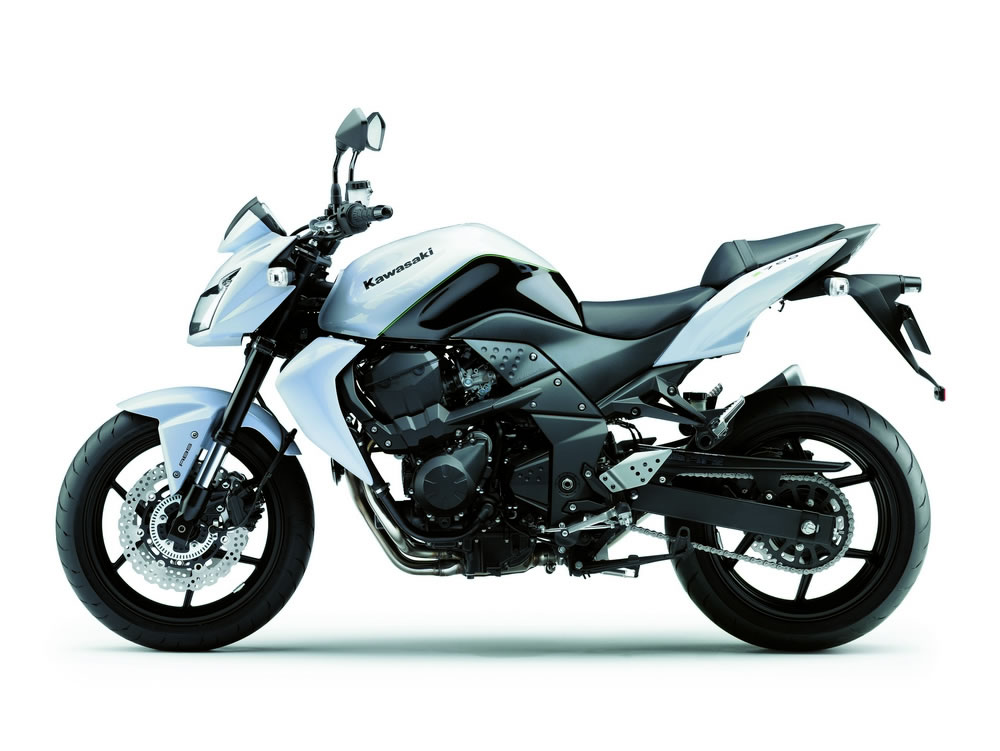
Kawasaki Z750 White Picture

kawasaki z750 white picture
kawasaki z750 white picturekawasaki z750 white picture

kawasaki z750 white picture

General information
Model:Kawasaki Z750
Year:2010
Category:Naked bike
Rating:58.5 out of 100. Show full rating and compare with other bikes
Safety:See our safety campaign with the high safety rated bikes in this category.
Engine and transmission
Displacement:748.00 ccm (45.64 cubic inches)
Engine type:In-line four
Stroke:4
Torque:78.00 Nm (8.0 kgf-m or 57.5 ft.lbs) @ 8300 RPM
Compression:11.3:1
Bore x stroke:68.4 x 50.9 mm (2.7 x 2.0 inches)
Fuel system:Injection. Fuel injection: ø 32 mm x 4 (Keihin) with oval sub-throttles
Valves per cylinder:4
Fuel control:DOHC
Ignition:TCBI Digital Advance
Starter:Electric
Lubrication system:Forced lubrication, wet sump
Cooling system:Liquid
Gearbox:6-speed
Transmission type
final drive:
Chain
Physical measures
Dry weight:226.0 kg (498.2 pounds)
Seat height:815 mm (32.1 inches) If adjustable, lowest setting.
Overall height:1,069 mm (42.1 inches)
Overall length:2,096 mm (82.5 inches)
Overall width:805 mm (31.7 inches)
Ground clearance:155 mm (6.1 inches)
Wheelbase:1,440 mm (56.7 inches)
Chassis and dimensions
Frame type:Aluminum Backbone
Rake (fork angle):24.5°
Trail:104 mm (4.1 inches)
Front suspension:41 mm inverted fork with rebound damping and spring preload adjustability
Rear suspension:Bottom-Link Uni-Trak with gas-charged shock Stepless 7-way
Front tyre dimensions:120/70-ZR17
Rear tyre dimensions:190/50-ZR17
Front brakes:Double disc
Front brakes diameter:300 mm (11.8 inches)
Rear brakes:Single disc
Rear brakes diameter:250 mm (9.8 inches)
Speed and acceleration
Other specifications
Fuel capacity:18.50 litres (4.89 gallons)
Further information
Parts and accessoriesCheck out parts and accessories from our partners. Kawasaki Z750 accessories
Ask questionsJoin the 10 Kawasaki Z750 discussion group.
Insurance, loans, tests Check out insurance here. Search the web for dealers, loan costs, tests, customizing, etc.
Related bikesList related bikes for comparison of specs

Harley Davidson Touring Road King

Harley Davidson Touring Road King
The history of Harley-Davidson

The history of Harley-Davidson motorcycles began in Milwaukee in 1903. Bill Harley and Arthur Walter Davidson developed a one cylinder motorcycle in the turn of the century and the engine was developed with the introduction of the combustion engine of a cylinder gasoline used in 1903, designed for racing.
In 1908 already has a small company which built the motorcycle and another member of the Davidson family, William, joined the group. Then began to have employed about 20 people.
In 1909 Bill Harley made the first draft of the 1000 CC V-Twin, a modest seven horsepower making it the brand image of Harleys and more recognized.
In 1910 came the legendary "Bar and Shield" logo that was placed on the bike. This would become the symbol of Harley-Davidson. The numerous first places won in races, endurance contests and finally give recognition to the brand Harley-Davidson.
In 1911 the engine was introduced "F-head" engine until 1929 when the "Flathead" was placed.
In 1912 the growth of Harley-Davidson and Company had to build a new factory. It became an exporter in the same year with its first sale in Japan in the United States there were more than 200 dealers.
In 1914 dominated the racing motorcycles.
In 1915 appeared the three engine speeds.
In 1917 a third of all Harley-Davidsons were sent to the U.S. Military to fulfill their patriotic call and help in the war effort. The following year about half were sold to the U.S. Military. At the end of about 20,000 motorcycles were used in the war which were Harley-Davidson.
In 1918 already has one of the largest factories for the production of motorcycles in the world with approximately 2,000 dealers. The V-twin was Harley's time as trying to dethrone the Indiana. At this time the car was T-Ford and thus the Harley-Davidson began to dedicate to the manufacture of parts, lateral and even automobiles, aircraft engines and also to improve their own products.
In 1920 some changes occurred in the bike, which today are more recognizable. One such change was the identifiable teardrop shape, gas tank.
In 1926, a single cylinder engine was available again after being discontinued in 1918.
In 1928, the first twin-cam, engine and front wheel brakes were available on Harley-Davidson. With this modification, the motorcycle could reach speeds exceeding 85 mph.
In 1930 and subsequent years saw record losses of more awards and the Harley-Davidson.
In 1932, the three-wheel Servi-Car was introduced, becoming the police vehicle, business and family. The appearance also changes as the "eagle" placed on all Harley-Davidson in tanks of gasoline, as well as changes to the engine. Appeared then to CC in 1340, becoming the trademark of Harley Davidson motorcycle.
In 1936 became the year in which the Knucklehead of the motorcycle was launched.
In 1940, once again, the Harley-Davidson answered the call and sent its fleet of motorcycles for the war.
In 1941 the production was suspended for marketing calendar and open again in November 1945.
In 1957 the Sportster was born, becoming an immediate success.
In 1969, it was time for a merger with U.S. company Foudry Machine Company (AMF).
In 1970 there was a revolution of the Harley-Davidson.
In 1971, the cruiser was born.
In 1973 came a new plant.
In 1975 was the first of four consecutive years that the Harley-Davidson won the AMA Grand National Championships in dirt track.
In 1977, the FXS Low Rider and the FLHS Electra Glide Sport were introduced to the public.
In 1980 another change in partnership developed the engine and transmission.
In 1980, the FLT model was born with 5-speed transmission hard bolted to the engine.
In 1981 members of the Harley-Davidson purchased the Harley-Davidson Motor Company from AMF.
In 1983, the Hog group was founded and became the largest factory-sponsored motorcycle in the world. By the year 2000, the club had more than 500,000 members.
In 1984, the 1,340 cc V-twin engine was introduced, it took seven years to make.
In 1984, the company managed to create a modern motorcycle, which was still a Harley Davidson.
In 1987, the Harley-Davidson Company obtained a place in the New York Stock Exchange for those interested in having a financial stake in the company.
In 1988, Harley-Davidson celebrated its 85th anniversary in Milwaukee, an event that brought about 60,000 fans of Harley-Davidson. At the end of this revolutionary decade for Harley-Davidson, the FXSTS Softail Springer model was introduced. In the early 1990's the Fat Boy design was introduced and quickly succeeded. The name Fatboy was derived by combining the names of the two atomic bombs "Fat man" and "Little Boy" which were launched on Hiroshima and Nagasaki.
In 1991, the Dyna line of Harley-Davidson's was introduced with the FXDB Dyna Glide Sturgis.
In 1994 saw the jump of Harley-Davidson for Superbike racing with the VR1000.
At this point in America, the Harley Davidson have 62% of the market of motorcycles with 850 CC or more! Due to the many fans around the world can say that is the brand of bikes with more success in the market for motorcycles.

2010 Cross Motorcycle - Honda CRF250R Specifications

2010 Cross Motorcycle - Honda CRF250R
2010 Honda CRF250R - USA Specifications
MSRP: $7,199 USD

ENGINE
Engine Type 249cc liquid-cooled single-cylinder four-stroke
Bore and Stroke 76.8mm x 53.8mm
Induction Programmed Fuel Injection (PGM-FI), 50mm throttle body
Ignition Full transistor with electronic advance

Compression Ratio 13.2:1
Valve Train Unicam®, four-valve; 30.5mm intake, titanium; 25mm exhaust, steel

DRIVE TRAIN
Transmission Close-ratio five-speed
Final Drive #520 chain; 13T/48T

CHASSIS / SUSPENSION / BRAKES
Front Suspension 48mm inverted Showa cartridge fork with 16-position rebound and 16-position
compression damping adjustability; 12.4 inches travel
Rear Suspension Pro-Link® Showa single-shock with spring-preload, 17-position rebound-damping
adjustability, and compression-damping adjustment separated into low-speed (13 positions)
and high-speed (3.5 turns); 12.6 inches travel
Front Brake Single 240mm disc with twin-piston caliper
Rear Brake Single 240mm disc
Front Tire Dunlop 742FA 80/100-21
Rear Tire Dunlop D756 100/90-19

DIMENSIONS
Rake 27.9° (Caster Angle)
Trail 116mm (4.56 inches)
Wheelbase 58.8 inches
Seat Height 37.6 inches
Curb Weight 226 pounds (Includes all standard equipment, required fluids and a full tank of fuel-ready to ride)
Fuel Capacity 1.5 gallons
Ground Clearance 12.8 inches

OTHER
Model ID CRF250R
Available Color Red

2009 Suzuki GSX-R750 Hot Babe Wallpaper

2009 Suzuki GSX-R750 Hot Babe Wallpaper
2009 Suzuki GSX-R750 Hot Babe Sport Motorcycle Wallpaper

2009 Suzuki GSX-R750 Black Edition

2009 Suzuki GSX-R750 Black Edition
2009 Superbike Sport Motorcycle - Suzuki GSX-R750 Black Edition

Custom Buell XB 12 Diavolo Edition

Custom Buell XB 12 Diavolo Edition

Custom Buell XB 12 Diavolo Edition
Custom Sport Motorcycle StreetFighter - Buell XB 12 Editione Diavolo by R-R Customize

Buell XB 12 Dunlop Race Replica

Buell XB 12 Dunlop Race Replica

Buell XB 12 Dunlop Race Replica
Buell XB 12 Dunlop Race Sport Motorcycle Replica by R-R Customize


Technical Specifications Buell XB 12-S Dunlop Race Replica by. RRC
Model: Buell XB 12-S model year 2004
Engine: Stock
Air cleaner: K & N
Exhaust / Mufflers: Stock header polished Sebring Twister muffler with RRC DB eater
Injection: Stock with Sinus power module
Clutch: Müller Power Clutch Kitt
Rear Wheel: Original rear wheel broadened to 6, 25“x 17“
Pulley: Original modified to RRC optic
Tires: Dunlop Sportmax Race Replica
Front: 120 / 70 ZR 17
Rear: 190 / 50 ZR 17
Tail Section / Seats: RRC rearsection modification manufactured from cast aluminium include LED taillight Stock seat
Frontfender: RRC Carbon
Cockpit: Stock
Handlebar: Aluminium Handlebar (780mm)
Flashers: Front: Kellermann Micro LED flashers
Rear: Kellermann Micro flashers
Mirror: RRC Underhand Mirror
Fork-system: Tripple trees black powder coated – fork tubes Titan / Nitrite coated – all other fork parts black anodised – Wilbers progressive springs
Footpegs: RRC aluminium set back footpeg system including eccentric variable peg position.
Brakes: Braking Wave discs – brake fluid reservoir rear at new position all brake lines stainless steel
Spoiler: Stock
Shocks: Wilbers rear shock
Steering Damper: Showa steering damper with RRC bracket
Windscreen: Stock, position mount 10mm lower
Pulleycover: RRC aluminium Pulleycover
Extras: Scoop oil cooler – Belt guard – Mud guard – Engine Scoop right – bracket head lamp modified
Paint and Airbrush: Experience Colours Colours: Perlmut white with red and yellow Candy colours. Camelion Pearls, Cian blue to violet Pin Stripes

EICMA cafe racer in 2009 BMW Concept 6

BMW introduced the concept of inline six-cylinder EICMA cafe racer in 2009 shows in Milan, Italy.

Inline-six engine has a point in the BMW cars for decades and the German motorcycle manufacturer division to take the challenge to match a straight six and a bike without making too long or too wide. The result is the BMW Motorrad Concepts 6, and an evolution of BMW says "will expand the K-Series in the near future".

6 The concept of the machine is about four inches slimmer than the production of the BMW inline-six engine, so only a little wider than a large capacity four. To keep down the wide, the machine has a relatively long stroke with a very small gap between the cylinders. Ancillaries and components of electric vehicles are behind them on the crankshaft and transmission to minimize the width of the machine further.

EICMA cafe racer in 2009 BMW Concept 6The BMW Concept 6

BMW engineers also tried to keep the weight low by using hollow-drilled camshafts and light connecting rods. The engine’s weight is also distributed so that a balance shaft and its drive elements are not necessary.

Like the straight-four in the K1300 series, the Concept 6’s engine is tilted forward 55 degrees for added balance and a low center of gravity. The tilted engine also provides space for an aerodynamically positioned intake manifold above the engine.


EICMA cafe racer in 2009 BMW Concept 6The inline six engine may be powerplant for future K-Series motorcycles.


EICMA cafe racer in 2009 BMW Concept 6A design sketch points out features such as the intake manifold. Click on the picture to see a larger version.

The Concept 6’s engine uses dry sump lubrication, keeping the crankcase low and flat. Without an oil sump, the engine can be placed lower in the frame than otherwise.

According to BMW, the six-cylinder engine produces power in the same range as its 1.3-liter straight four engines. The difference will be in the torque, which will be comparable to the largest motorcycle engines. BMW says will be the six-cylinder will offer 96 ft-lb. at 2,000 rpm with revs reaching nearly 9,000 rpm.

BMW describes the Concept 6 as a mix of classic and modern styling and an evolution of the café racer.

The “split face” design element found in other BMW bikes such as the S1000RR divides the Concept 6 into three sections, extending from the front of the fairing to the carbon-fiber fuel tank. LED headlights further accentuate the split face element.

Suspension is built around a light-alloy bridge frame with Duolever and Paralever arms for both front and rear. The 17-inch HP forged wheels are equipped with an extra-large brake system using six-piston fixec calipers.

EICMA cafe racer in 2009 BMW Concept 6BMW says a rev counter is unnecessary for the Concept 6.

The instrument panel uses a minimalist design without a rev counter. BMW says the rev counter was intentionally omitted because the engine produces a “supreme flow of power at all speeds”. Instead of a displaying the revs, the LED display shows how much torque is available.


source : www.motorcycle.com

Harley-Davidson V-Rod 69 Race Edition Modification

Harley-Davidson V-Rod 69 Race Edition Modification

Harley-Davidson V-Rod 69 Race Edition Modification
Harley-Davidson V-Rod 69 Race Edition Sport Motorcycle Modification by R-R Customize

2010 Yamaha V-Max VMX17 Specifications

2010 Yamaha V-Max VMX17

2010 Yamaha V-Max VMX17 - USA Specifications
MSRP: $19,500 USD (Candy Red) Available from November 2009


Engine
Type 1679cc liquid-cooled 65° V-4, DOHC, 4 valves/cylinder

Bore x Stroke 90.0mm x 66.0mm

Compression Ratio 11.3:1


Fuel Delivery Fuel Injection with YCC-T and YCC-I

Ignition TCI: Transistor Controlled Ignition

Transmission 5-speed, multiplate slipper clutch

Final Drive Shaft

2010 Yamaha V-Max VMX172010 Yamaha V-Max VMX17
Chassis
Suspension/Front 52mm telescopic cartridge fork w/oxidized titanium coating. Fully adjustable preload, compression and rebound; 4.7 in travel

Suspension/Rear Single shock w/remote reservoir and remote adjustable for preload, compression and rebound

Brakes/Front Dual 320mm wave-type discs; radial mount 6-piston calipers, Brembo® radial pump master cylinder

Brakes/Rear 298mm wave-type disc, single-piston caliper and Brembo® master cylinder

Tires/Front Bridgestone® Radial 120/70-R18 59V

Tires/Rear Bridgestone® Radial 200/50-R18 76V


Dimensions
Length 94.3 in

Width 32.3 in

Height 46.8 in

Seat Height 30.5 in

Wheelbase 66.9 in

Rake (Caster Angle) 31.0 in

Trail 5.8 in

Fuel Capacity 4.0 gal

Fuel Economy** 27 mpg

Wet Weight*** 683 lb / 685 lb (CA model)


Other
Warranty 2 Year (Limited Factory Warranty) with Priority Delivery Program


2010 Yamaha V-Max VMX17 - Canada Specifications
MSRP: $22,999 CDN

Engine Liquid-cooled, DOHC, 4-valve, 65 degree V-4
Displacement 1679cc
Bore and Stroke 90 x 66mm
Compression Ratio 11.3:1
Maximum Torque 17 kg-m (123 ft-lb) @ 6,500 rpm
Fuel Delivery Mikuni 48mm fuel injection
Estimated Fuel Consumption* 11.4kpl / 32mpg (Imp.)
Lubrication Wet sump
Ignition / Starting TCI / Electric Start
Transmission 5-speed (with slipper clutch)
Final Drive Shaft


Suspension (Front) Fully adjustable 52mm cartridge fork, 120mm (4.7") travel
Suspension (Rear) Fully adjustable Link Monocross, 110mm (4.3") travel
Brakes (Front) Dual 320mm discs with ABS
Brakes (Rear) 298mm disc with ABS
Tires (Front) 120/70R18
Tires (Rear) 200/50R18


Length 2,395mm (94.3")
Width 820mm (32.3")
Height 1,190mm (46.9")
Wheelbase 1,700 mm (66.9")
Rake / Trail 31° / 148mm (5.8")
Ground Clearance 140mm (5.5")
Seat Height 775mm (30.5")
Fuel Capacity 15 litres
Wet Weight 310 kg (683 lb)
Colour(s) Deep Metallic Red


  • Fuel economy estimates are based on US EPA exhaust emission certification data obtained by Yamaha and converted into Canadian measurements. Your actual mileage will vary depending on road condition, how you ride, maintain your vehicle, accessories, cargo and operator/passenger weight.

Specifications, appearance, and price of product are subject to change without notice.
  • MSRP does not include freight, PDI (Pre Delivery Inspection), pre-rigging (boats), or taxes. Dealer may sell for less.
2010 Yamaha V-Max VMX172010 Yamaha V-Max VMX17

source : www.totalmotorcycle.com

2010 Yamaha WR250X Supermoto Feature

Features and Benefits (USA):
2010 Yamaha WR250X  Supermoto2010 Yamaha WR250X  Supermoto

Key Features:
  • Directly descended from our YZ motocrossers and WR off-road machines-even the original Yamaha YA-1 of 1955-the WR250X is here to make Yamaha's off-road prowess street accessible.
  • Not exactly an enduro, a supermoto or a sportbike, the WR250X is for riders who ride mostly paved surfaces. Its sibling, the off-road inspired WR250R, is for riders who spend more time in the dirt.


Engine:
  • 250cc liquid-cooled, DOHC engine with two titanium intake valves and two steel exhausts, forged piston and plated cylinder for outstanding durability.
  • Pentroof combustion chamber with downdraft-type straight intake helps make excellent power across the rev band, with maximum power at 10,000 rpm.
  • First use of fuel injection on a 250 Yamaha on/off-road bike. The system relies on input from a crank sensor, intake air pressure sensor and throttle position sensor feeding a compact ECU to provide optimum combustion.
  • An ECU-controlled EXUP® exhaust valve, along with an electronic intake control valve, broadens the powerband.
  • High lift cams have WPC surface treatment in which the surface is sprayed with fine powder at over 100 meters per second to increase surface hardness.
  • Three-axis engine layout keeps the engine compact. Wet sump tucks between frame rails to keep the engine height down.
  • Rare earth-type ACM alternator keeps the weight down while providing all the current needed to run the FI and lighting systems.
  • Direct ignition coil sits atop the spark plug-another first on a Yamaha on/off-road model.
  • Six-speed gearbox provides a wide spread of ratios, with shower-type lubrication for reliability. Special, light-action clutch makes shifting a snap.
  • Tucked-in, three-chamber muffler helps keep mass centralized and the bike quiet.
  • Electric start only: Leaving off the kickstarter keeps it light and simple.


Chassis/Suspension:
  • 17-inch wheels mount radial street rubber in 110 front and 140mm rear widths and help lower the seat approximately 1.4 inch compared to the WR250R.
  • One-tooth smaller rear sprocket (13/42) works with the smaller-diameter tires to bring out the WR250X's strong accelerating character.
  • Stiffer springs front and rear and street-oriented damping settings reduce pitch compared to the WR250R for excellent pavement performance.
  • YZ/WR250-inspired semi-double-cradle frame uses a main frame of cast and forged aluminum sections, with high-strength steel downtube for excellent strength and rigidity characteristics.
  • Asymmetrical swingarm provides excellent strength/rigidity balance and a dynamic look. Cast aluminum crossmembers, extruded arms and a 22mm rear axle are carefully tuned for optimum handling.
  • Fully adjustable 46mm fork provides 10.6 inches of wheel travel. A forged lower triple clamp and a cast upper one help give outstanding front-end feel. An aluminum steering stem reduces weight.
  • Linkage-mounted rear shock provides 10.4 inches of travel with adjusters for compression damping, rebound damping and spring preload-and features a 14mm rod and 46mm cylinder for excellent damping and fade resistance.
  • Wave brake rotors front and rear, including a large, 298mm front disc, reduce unsprung weight and provide excellent performance. Rear pedal is forged aluminum.


Additional Features:
  • A slim, steel fuel tank is shaped with knee grip in mind, and the entire ergonomic layout is designed to make the rider feel like part of the bike.
  • Narrow, YZ-inspired seat features gripper-type cover for great seat-of-the-pants feel. Seat height is 35.2 inches.
  • WR enduro-style instrument panel provides excellent visibility in spite of the compact size. Basic mode provides speed, clock, tripmeter and self-diagnostic function. Measurement mode includes stopwatch, distance-compensating tripmeter, etc.
  • Minimalist front and rear fenders are designed for function, simplicity and lightness.
  • Bodywork with separate radiator heat outlet helps keep engine and rider cool.
  • Lightweight headlight and LED taillight maximize visibility and draw less current.
  • Separate clutch cover means easier serviceability.
  • One-screw air filter serviceability.
  • Adjustable front brake lever.
2010 Yamaha WR250X  Supermoto
motorcycle modification Proudly Powered by Blogger